


The world wanted this story to be real. In some cases, many believed did. You could feel it in every share, every comment and every headline that followed. But wanting something to be true and proving that it is are two very different things.
Global (27 March 2026) – Viral doesn’t always mean true. It means fast. It means emotional. It means shareable. And the story of the 7 dogs had all of that… in spades. A perfect mix of danger, loyalty and a journey home that felt like it had been written by Disney itself. The only problem is that the viral version wasn’t the real story.
A few days ago, a clip of 7 dogs moving together along a busy road in Changchun started doing the rounds on social media. 7 dogs, different shapes and sizes, sticking together as cars sped past them, moving with a unity that felt almost intentional. It looked like something out of a movie. It felt like something bigger. A story that pulled us in immediately.
Seven dogs stolen from their owners have gone viral after escaping from an illegal transport truck and making their way home.
They traveled around 17 km together, led by a corgi across highways and fields, now safely back with their respective owners..🐶🐾🥺❤️ pic.twitter.com/H5VB9BQkGB
— 𝕐o̴g̴ (@Yoda4ever) March 23, 2026
But then… things didn’t add up.
Here’s what is actually true. 7 dogs were filmed. That is the fact. Everything else that followed was layered on top through assumption, retelling and a version of storytelling that travelled far quicker than verification ever could.
The video was first captured in mid-March by a motorist near Changchun. He saw the dogs on a high-speed road, recognised the danger they were in, and shared the clip online, asking for help. That moment, that intention, is where the story begins. In the comments, he made a guess. He said the dogs “might have come from a transport vehicle”. It wasn’t something he witnessed. It also wasn’t something he could confirm. It was just a thought. Speculation.
But that thought became the foundation for everything that followed and within days the internet had built an entire narrative around it.
The story grew legs. The dogs were no longer wandering… they were “stolen”. Then they had “escaped from a truck”. Then they were fleeing “dog-meat traders”. Then they had travelled “17 kilometres home in formation”, turning into something cinematic and complete. Each version added more certainty, more emotion, more drama… until the speculation started to feel like fact.
But none of those details were ever confirmed.
Local journalists and volunteers went out to find the truth. They spoke directly to the original filmer. They traced the dogs. They knocked on doors and searched the surrounding areas, even using drones to try and locate where the animals had come from and where they were heading. What they uncovered was far less dramatic but no less real. The dogs hadn’t escaped from anything. There was no truck, no organised journey, no coordinated mission home. According to local verification and provincial authorities, the dogs had wandered off from a nearby village, drawn together by a female German Shepherd in heat, something entirely natural that just happened to look extraordinary when captured from the right angle at the right moment. The 17 kilometres was actually less than 4. And apparently, the dogs, who are all well looked after, wander often, but always come home.
And they did eventually go home.
The confusion sits in the middle of the story, where speculation quickly became “fact”, social media repetition became “proof” and emotion filled the gaps where evidence didn’t exist. Publications around the world picked up the dramatic version and ran with it, many sharing the story as “truth” before taking the time to verify it. Now, some of those very same outlets are revisiting their coverage. The Miami Herald has updated its reporting. People, which initially shared the more emotional version, has added an apology and clarification to its original article.
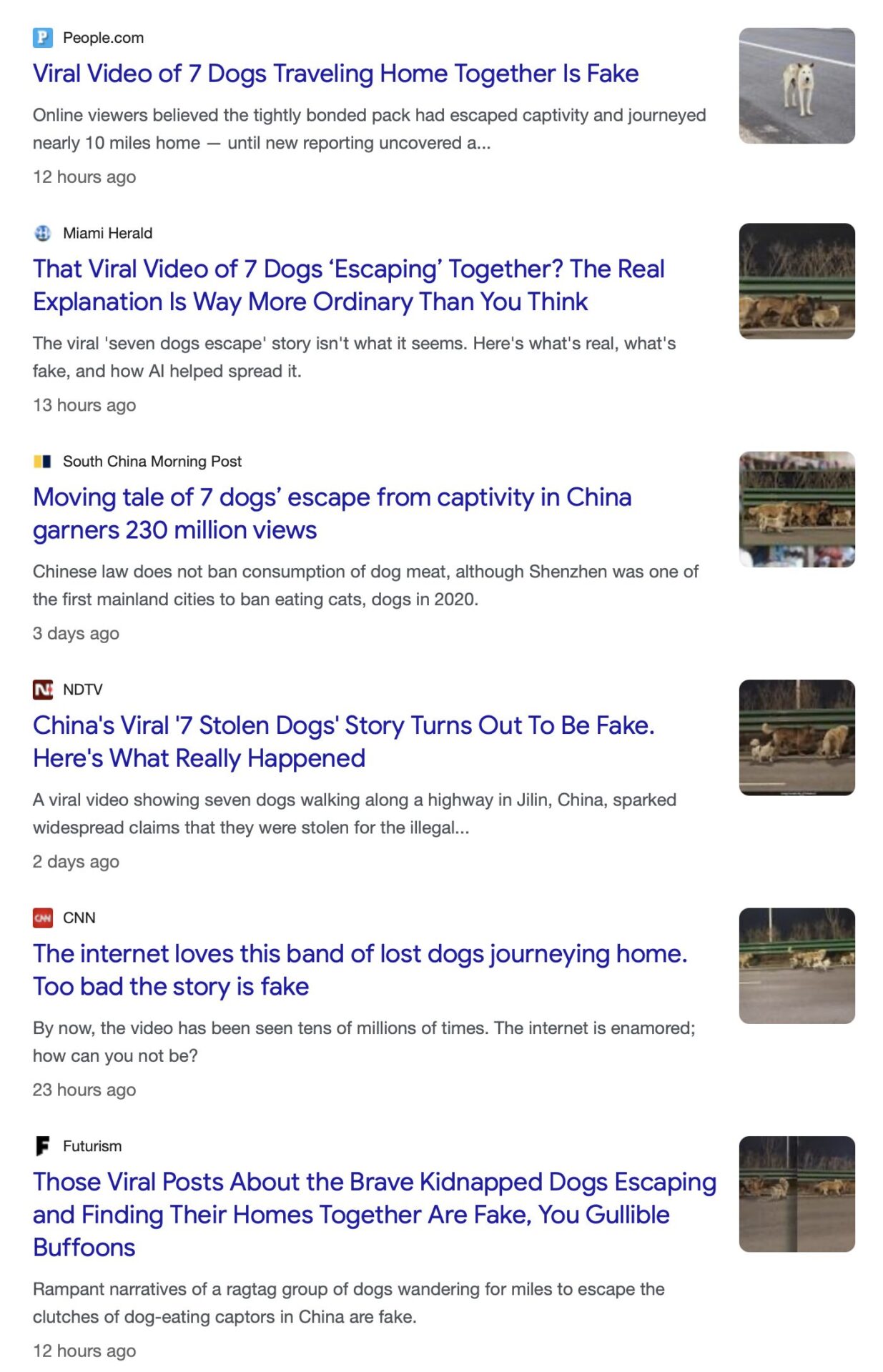
That is the cycle. Fast, emotional, shareable… and then, eventually, factual.
For us, here at Good Things Guy, it kinda feels like a moment of vindication. When we first saw the clip, we wanted it to be true just as much as everyone else did. There was something really beautiful in the idea of 7 dogs “being kidnapped and then escaping to find their way home together”. But there were gaps, and we noticed them immediately. Instead of running with the headline, we looked deeper. We read local reports (which we had to translate) and followed the details that didn’t line up. Good Things Guy was one of the first publications to say, “Hang on… this isn’t adding up.” And we felt the pushback. There were many comments telling us we were wrong and messages insisting the story was true. We even had emails with people sharing pictures (created by AI) who insisted the story was real and “we got it wrong”.
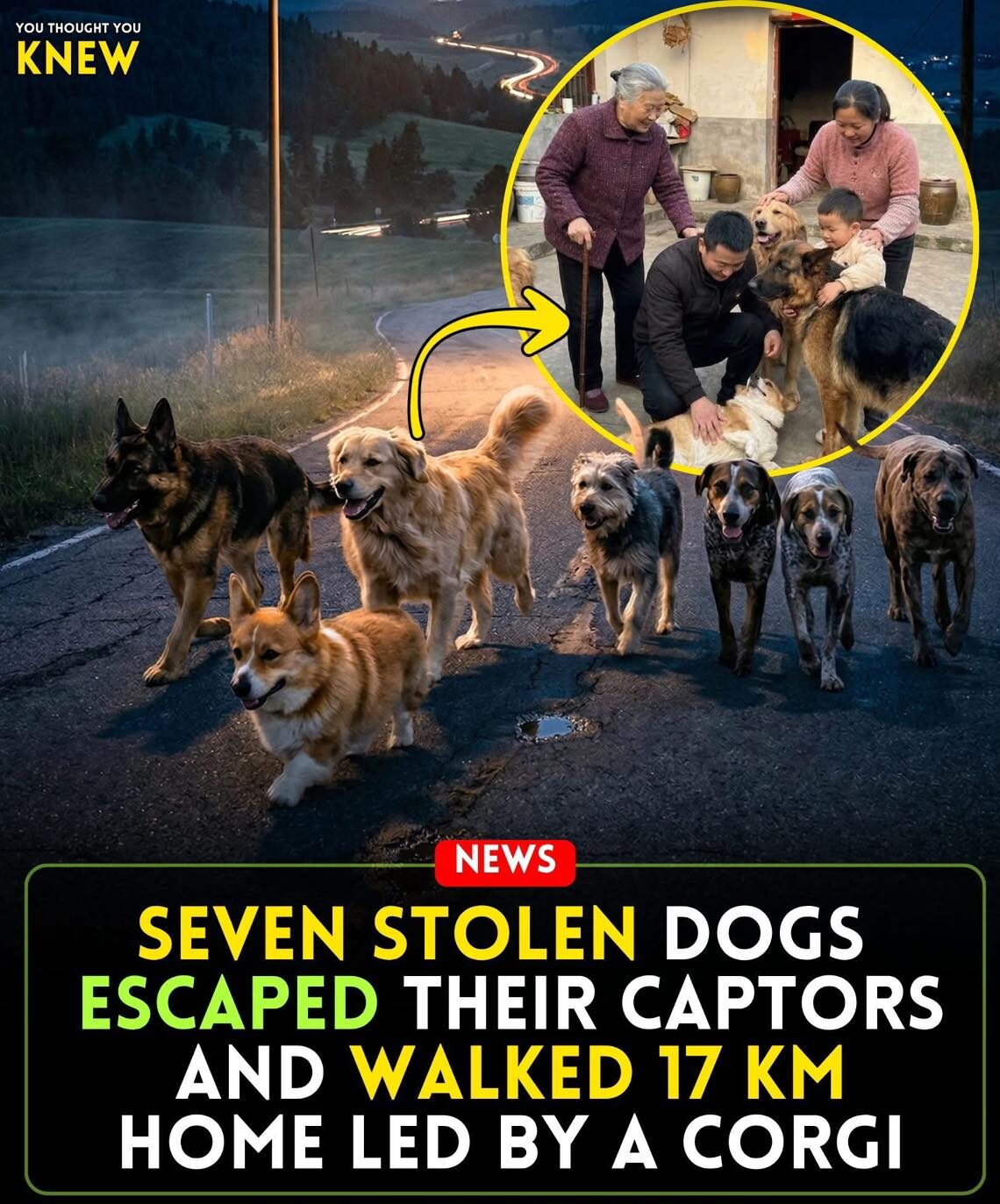
Still, we trusted our gut and stayed with it, leaning into the responsibility that comes with telling stories that reach millions of people. There is something incredibly important in that. Media has the power to shape how we feel, what we believe and how we see the world. It can lift, inspire and connect, but it can also blur the line between what is real and what is simply repeated enough times to feel real. That does not mean the intent is always wrong. It often comes from a place of wanting to share something good, something hopeful… something worth talking about. The challenge is holding onto truth while doing that.
The story may not have been what we thought it was but the reaction to it says everything about who we are. We still stop. We still care. We still lean into stories that make us feel something good. And maybe the real win here isn’t the version that went viral… it’s the reminder that there are still millions of people out there who want to believe in something kind and something connected. The world still believes in good things (and we believe that’s a really good thing).
 by
by 