


There’s a beautiful South African philosophy that says, ‘I am because we are.’ It’s the message that carries the NSRI’s latest project in Hout Bay – a step-change for offshore rescue along the coast.
Cape Town, South Africa (12 March 2026) – Volunteer Spencer Oldman has been asked the same question so many times that he doesn’t even need to think about the answer anymore.
What does NSRI Hout Bay need most?
“As Station Commander, people often ask me what our biggest need is. My answer is always the same – I need to know that when I send my volunteers out into a storm, they have the best possible chance of coming home safe and successful.”
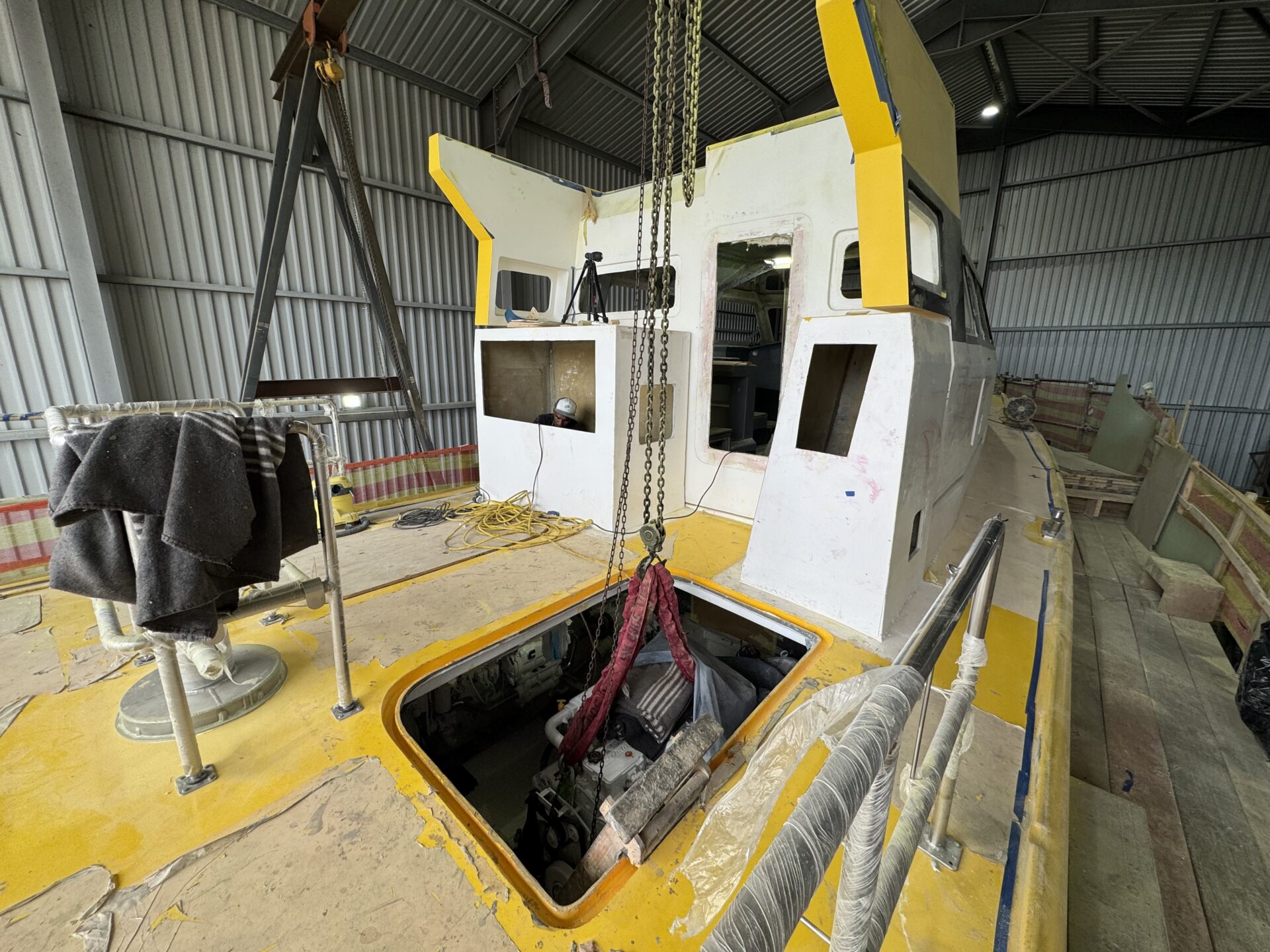
Last year, we shared the news of the NSRI Hout Bay’s game-changing 14-metre offshore rescue vessel, set to be one of the most advanced in the NSRI’s fleet. The Spirit of Ubuntu (Rescue 8) is currently being built, with a target to be on the water by August 2026.

The Hout Bay crew has gone out in an older, smaller vessel for years, and they’ve saved many lives with her. Spirit of Ubuntu is built from the ground up and directly addresses many of the practical challenges faced in those previous rescues.
“For a long time, our team has done incredible work using older, smaller boats. But those missions tended to be exhausting. Our crew would often arrive at a rescue scene wet, exhausted and worn out by the elements endured over the 3–4 hour trip through large South Atlantic winter storms. We have had several deep sea night calls over the past few years which can attest to that.” says Spencer.
The new 14 meter Offshore Rescue Craft can fit ten crew members, boasts an air-conditioned cabin with specialised seating that absorbs the impact of the sea, and with three times the range of their current vessel, the crew can go out further and stay on scene for longer.
“This means my crew isn’t just surviving the trip, they are arriving at the scene warm, dry, and physically ready to save lives. It allows us to push further out to sea and stay on the scene longer than ever before.” Spencer says.
Spencer also serves as Coxswain – the ‘captain’ behind the wheel – and says the new vessel’s detection systems will transform what’s possible after dark. Rescues will be supported by better communications, too.
“In the past, searching for a person in the water at night was like looking for a needle in a haystack while someone threw buckets of cold salty water in your face. Now, we own the night. With the new thermal imaging and low light cameras integrated into the electronic navigation suite and advanced digital radar systems, we can see through the dark and the mist.” says Spencer. “The communications system upgrade from the previous vessels takes us into an era where we can communicate on a global basis, whether it be through VHF radio, UHF radio, satellite communications or internet connectivity.”
Crews will be able to respond faster, operate further offshore and work safely in harsher conditions.
“It gives our volunteer rescue crews the tools they need to save more lives, more often, and in places where help has historically struggled to reach in time. Ultimately, this vessel represents hope… hope for those at sea, and reassurance for families” says NSRI Business Development Manager Dirk Coetzee.
What’s more is that the Spirit of Ubuntu is tied to a South African philosophy we always celebrate. The idea that we exist through each other, that your safety is my responsibility and mine is yours…
“The name of this boat, Spirit of Ubuntu, means ‘I am because we are.’ This vessel exists because of the support of our community, and in return, it allows us to be there for you when the conditions are at their worst,” says Spencer.
Behind every rescue is a community that makes it possible. The NSRI depends on volunteers who give their time, but it also relies on South Africans who give what they can to make those life-saving rescue happen.
Spirit of Ubuntu comes with an appeal. At R26 million, it’s being funded through ongoing public and corporate support, where businesses can have their logo permanently printed on the vessel for a R1 million contribution, becoming a meaningful part of what carries every rescue for decades to come.
“There’s a growing sense of excitement and belief in the campaign,” says Dirk. “It reminds people that saving lives at sea is a collective effort, and that everyone has a role to play.”
Sea Rescue is a team effort, and the team includes all of us. Together, in ways big and small, we can stand behind the people who put their lives at risk just to bring someone else home.
If you work would like to support this campaign, get in touch with the NSRI. Your referral or contribution could help save lives along the coast.

 by
by 